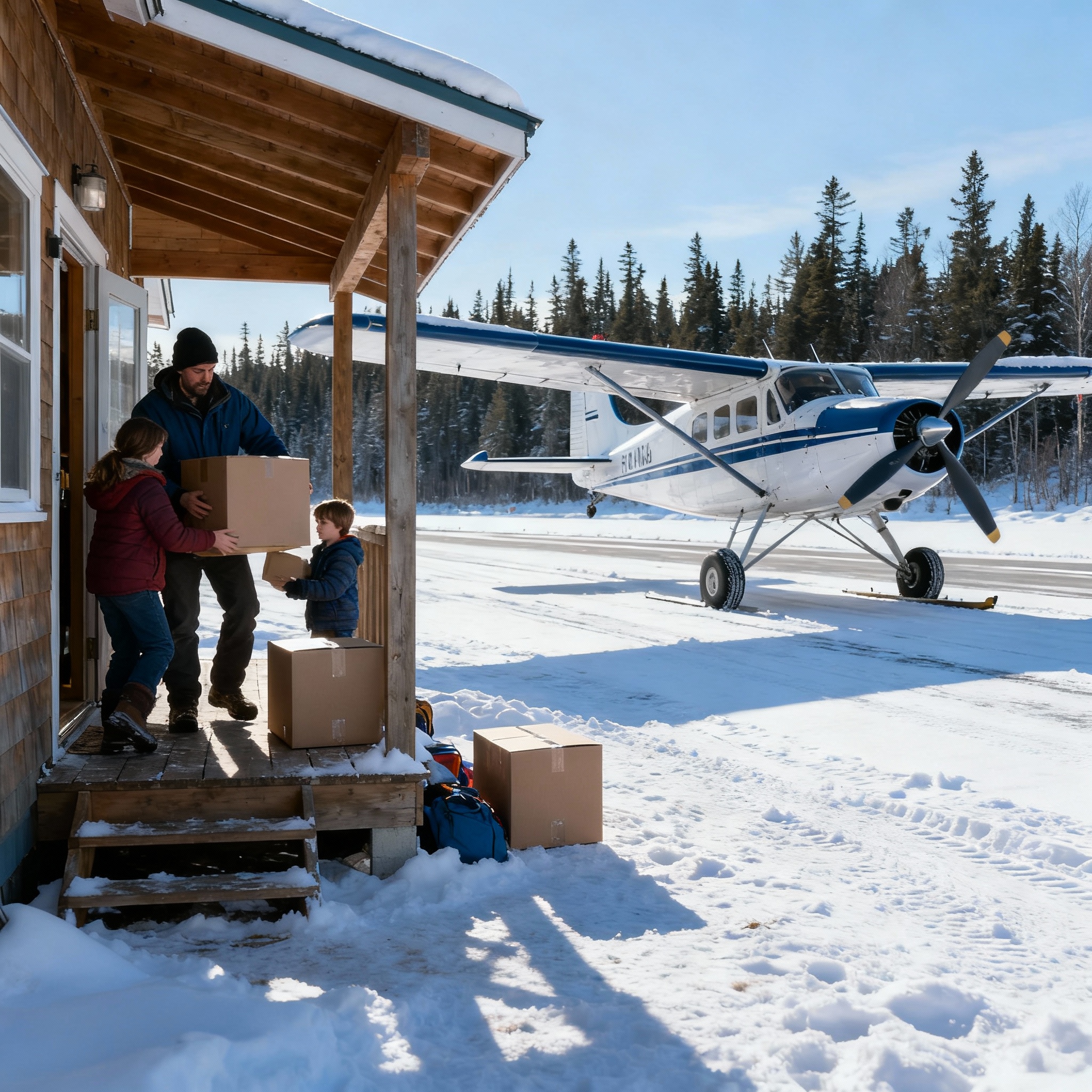
Breakup and freeze-up
Breakup typically spans spring, melting river ice and rendering winter routes unsafe, while freeze-up returns support for over-ice access after sustained cold in late fall and early winter. These shoulder seasons often isolate communities as river navigation and over-ice travel both become unsafe.
Practical plans include forward stockpiles before shoulder periods, tight communication with carriers, and conservative go or no-go thresholds that protect people and property.
Barge-heavy months
Bulk freight
Summer supports marine and river barge operations for vehicles, tanks, and structural cargo into roadless regions, subject to storms and port constraints.
Air link
Air cargo from major hubs maintains cadence for perishables and time-critical shipments, complementing slow but heavy barge lanes.
Wildfire risk
Smoke and convective weather can disrupt flight schedules, requiring buffers and alternate carriers during peak season.
Ice road opportunities
Heavy haul
Once ice thickness and ground frost are sufficient, heavy equipment can move overland, expanding options beyond air-only supply.
Timing risk
Later freeze-ups and earlier thaws compress windows, making prepositioned inventory and flexible contracts essential for reliability.
Safety minima
Operational decisions align with conservative thresholds for temperature duration, ice integrity, and daylight constraints to protect people and cargo.