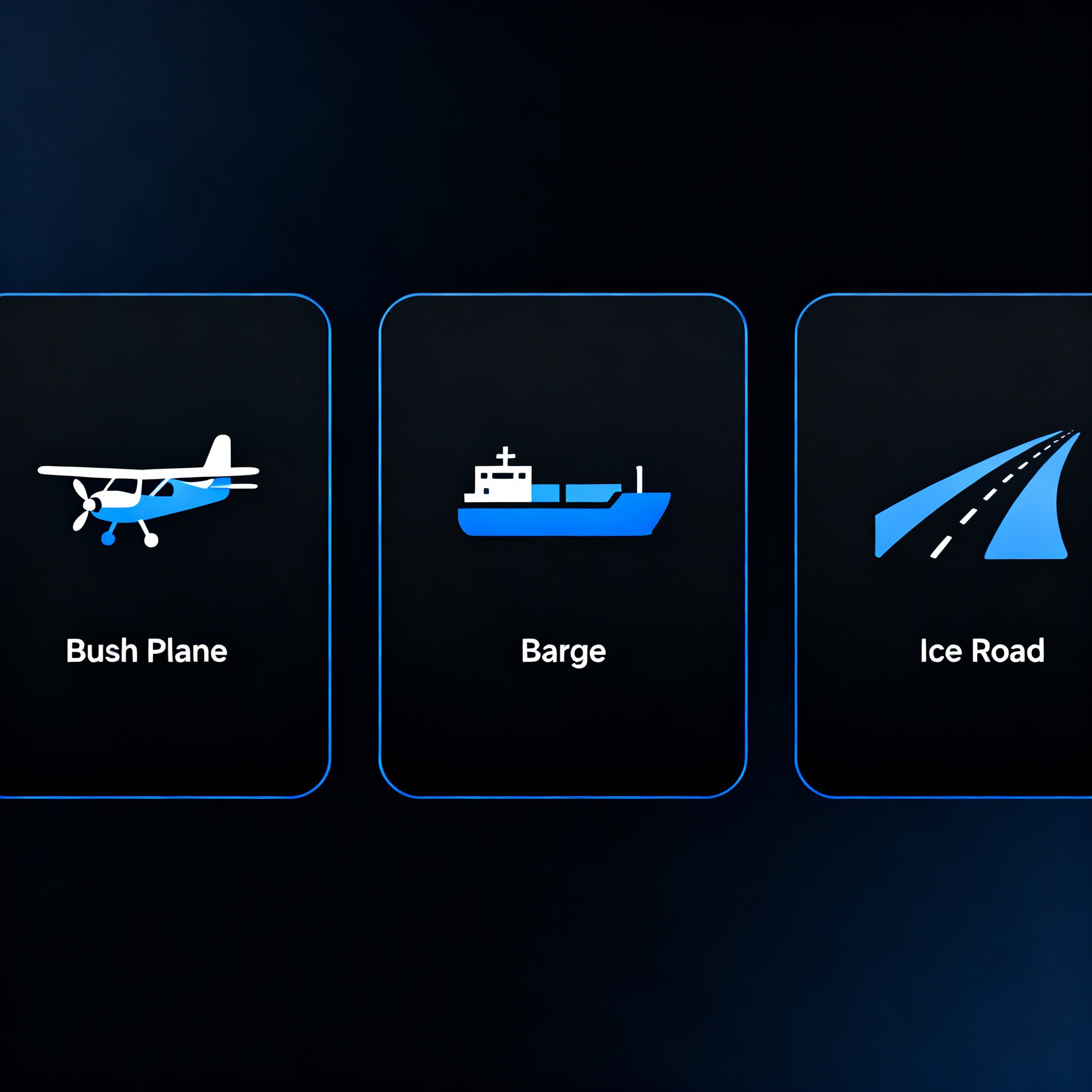
Designing aviation-centric moves
Aircraft and runways
Runway length, surface, lighting, and instrument procedures shape payloads and go or no-go thresholds for remote flights across the bush network. Cargo plans balance weight and cube with multi-stop routes to maintain service during dynamic weather, smoke, or crosswind constraints.
Anchorage hub role
Anchorage functions as a primary air cargo hub with frequent departures that sustain remote communities with essentials. Forward staging reduces dwell during holds and enables rapid resequencing across carriers and airframes when conditions change.
Supplying the Slope
Dalton access windows
The Dalton corridor and Arctic weather require cold-season readiness and lead time for equipment, fuel, and spares staged well before severe conditions set in. When overland moves narrow, air freight and charter operations bridge essential items into Slope communities and camps.
Heavy and hazardous
Bulk and hazardous cargoes demand compliance and specialized handling with contingency for barge or winter road alignment when feasible. Stockpiles at interior hubs reduce vulnerability to early thaws and late freeze-ups that compress hauling seasons.
Living and working off the grid
Energy and fuel
Plan for tank placement, power generation, and safe transfers aligned to barge or winter haul windows for replenishment.
Food and spares
Buffer supplies carry households and teams through shoulder seasons when neither river nor over-ice access is reliable for weeks at a time.
Medical access
Many roadless communities rely on air for access to inpatient care, driving requirements for reliable aviation access and alternates.