Relocation in Alaska demands aviation-first planning, seasonal access awareness, and redundancy across bush planes, barges, and winter roads to reach communities beyond the highway grid.
Designing safe routes involves matching cargo profiles to access modes: bush aircraft for year-round lifeline deliveries, barges for heavy freight in ice-free months, and overland winter roads once freeze-up is complete.
Bush Plane Landings
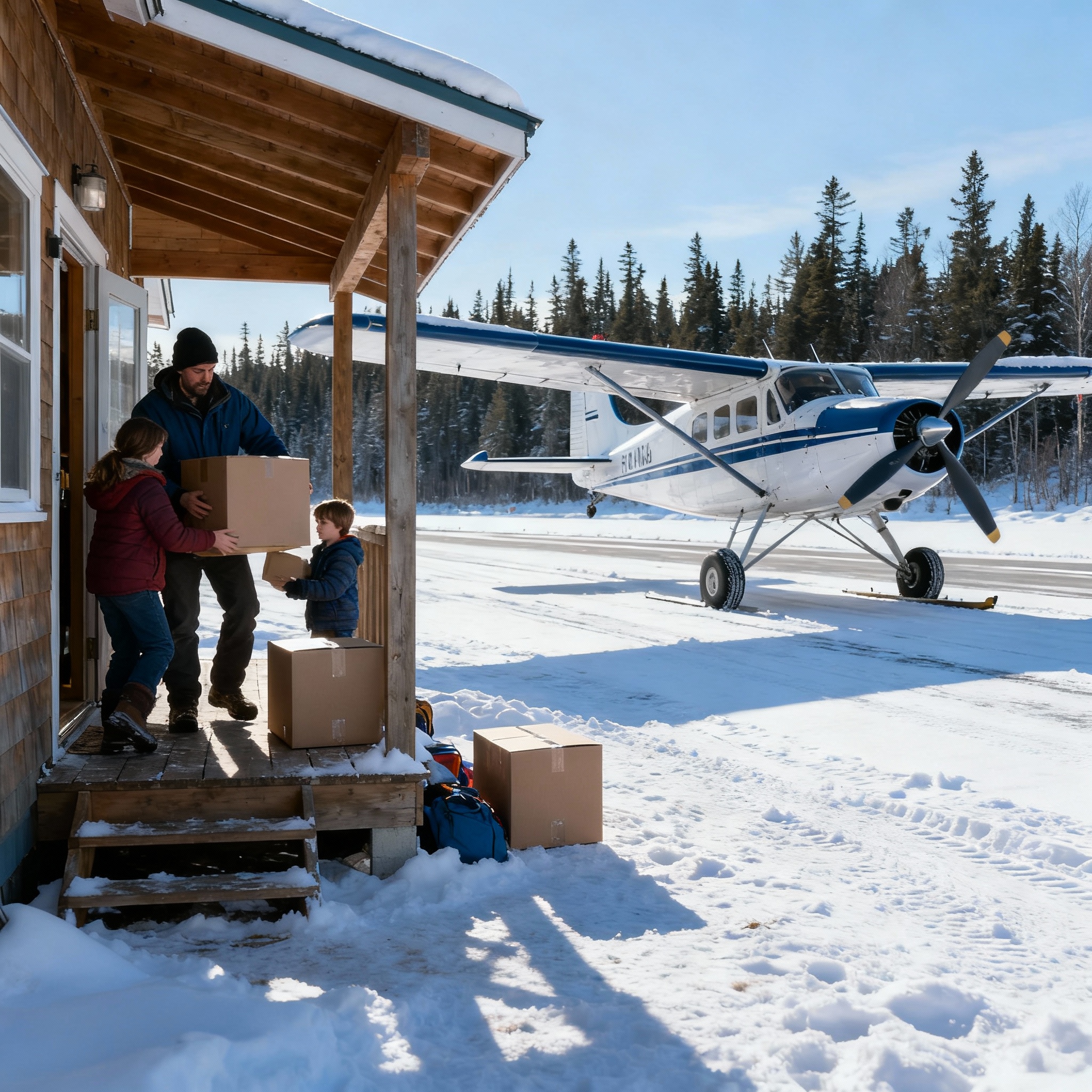
Small aircraft connect roadless communities year-round, with planning shaped by runway length, surface, weight and volume constraints, and weather minima.
Gravel, ice, and seaplane bases define payload envelopes and tire or float requirements.
Forward staging at major hubs reduces dwell during weather holds and maintenance intervals.
Multi-drop routing reduces idle time and increases resilience to transient disruptions.
River and Marine Barges
Barge seasons enable delivery of vehicles, tanks, structural materials, and fuel to coast and river towns when waterways are navigable and ports are ice-free.
Bulk freight aligns to summer windows on rivers and coastal lanes.
Schedule buffers account for storms, shallow drafts, and port priorities.
Last-mile handoff to aviation bridges distance from shallow or seasonal landings.
Ice Roads and Winter Trails
Once tundra and rivers fully freeze, heavy overland hauling becomes practical, though shoulder seasons limit both river navigation and over-ice trucking.
Temperature duration and ice thickness determine axle and gross weight limits.
Surface prep and maintenance mitigate shear, overflow, and drift hazards.
Stockpiles reduce exposure to early thaws and late freeze-ups.
Anchorage and Fairbanks split-screen banner
1
Remote Alaska Moves: Systems, Risks, and True Independence
Moving across Alaska’s remote expanse is less a point-to-point transfer and more an integrated system of lifeline logistics. Communities beyond the road network rely on air cargo and seasonal routes, with decisions shaped by local conditions, daylight, and service frequency. Families and organizations planning a move must translate broad objectives into modes, lanes, and buffers that survive the realities of weather, terrain, and limited infrastructure.
At the heart of durable plans is a layered approach. Air remains the most reliable year-round connector for people and perishables, but capacity, runway constraints, and weather minima require thoughtful load planning. Barges and coastal shipping shoulder the weight of vehicles, tanks, and construction materials, provided water levels and ice allow. Winter roads open heavy overland hauling when cold settles in, but they vanish during breakup and early freeze-up, leaving some communities isolated.
Anchorage serves as a prime staging hub with strong cargo throughput. Fairbanks complements with interior access and proximity to Arctic corridors. Together they form a hub-and-spoke pattern that can feed bush networks or overland lanes. Staging at both hubs, when feasible, creates optionality during sudden closures, aircraft maintenance cycles, or wildfire smoke.
Aircraft selection varies by runway length and surface. Short, unimproved gravel strips demand rugged airframes with appropriate tires or skis, while seaplane bases open options where runways are scarce. Payloads depend on balance between weight and cube, with bulky items often requiring barge delivery first, then local distribution by air. The interplay of mode choice and packaging discipline determines whether cargo flows or bottlenecks.
Marine logistics excel for heavy lifts during summer, yet require patience and precise manifests. River stages fluctuate, and coastal weather can stack delays. A practical tactic is to split essentials into air-bridge parcels that maintain daily life while the heavy barge carries the rest. This reduces risk if a storm front stalls vessels at anchor or a shallow reach restricts draft.
Winter’s gift is load-bearing ice and frozen ground, allowing equipment and bulk supplies to traverse landscapes otherwise impassable. Safety requires conservative assumptions: sustained temperature lows, verified ice integrity, and clear route maintenance plans. Speed should yield to caution; a single compromised stretch can halt a convoy and risk both people and cargo.
During shoulder seasons, flexibility contracts. Breakup melts river ice and undermines winter trails while waterways remain too dangerous for navigation. Early freeze-up reverses the problem. Stockpiles become the bridge. Smart relocations pre-position food, fuel, spares, and medications to ride out weeks when neither trucks nor barges can move, and aircraft face persistent low ceilings.
Communication with local authorities, carriers, and community leads is decisive. Windowed access demands rapid resequencing. When a Friday flight cancels, a Tuesday barge arrival may shift unloading crews and float schedules, then cascade into overland timing. Plans should encode decision thresholds and fallback contacts, reducing debate when hours matter.
Risk management is not a single spreadsheet. It is a living set of triggers tied to weather, capacity, and people. Designate alternates for each leg. Prepare documentation for hazardous materials and medical equipment. Keep clear records of cold-chain requirements, and test packaging against vibration and temperature during trial runs. A small up-front investment in simulations avoids costly surprises in the field.
True operational independence is not isolation. It is the ability to continue on mission timelines without compromising safety. That means redundant carriers, split loads, and rhythm. An operation that moves smaller parcels more often can absorb a canceled flight better than one that relies on a rare, fully packed departure. Similarly, a barge season with two staged voyages may outperform a single all-or-nothing shipment.
Local knowledge matters. A gravel strip with soft shoulders in late spring may need lighter gear and shorter landing distances. A river landing site can shift with sandbars. Ice roads may favor night runs during stable cold while day brings sun rot. Ground truth from residents and crews translates forecasts into actionable constraints.
Budgeting should reward reliability, not only lowest nominal cost. A bid without buffers can appear attractive but amplify downstream risk. Ask for detailed contingency pricing, change-order conditions, and weather hold policies. Understand how carriers prioritize lifeline freight during backlogs. A balanced portfolio of commitments to air, marine, and overland teams reduces dependency on any single chokepoint.
Technology extends the margin for success. Satellite messaging maintains coordination when cellular networks fade. Portable power and heat keep crews operational during holds. Sensor loggers confirm temperature control for sensitive goods. Digital checklists ensure documentation follows cargo from hub to remote ramp to doorstep.
When evaluating timing, consider human factors. Short daylight in deep winter affects ramp operations, inspection quality, and crew duty cycles. Summer’s long days bring energy but also wildfire smoke and thunderstorms. Align critical moves with the personnel most experienced in those conditions, and schedule rest aggressively to prevent fatigue-related errors.
For families relocating, off-grid readiness is both comfort and resilience. Prioritize water, heat, power, and food storage in the first phase. Sequence furnishings and tools by season and task. Keep a week’s worth of immediate-use items in airfreight-ready kits, and send bulky, non-urgent cargo by barge. Label, manifest, and photograph to simplify claims if weather forces a re-route.
For organizations, governance and compliance shape success. Air operations must align with runway lighting, instrument procedures, and alternates. Fuel and hazmat handling require specific labeling and training. Food shipments may need cold-chain proof. Medical supplies deserve redundant packing and clear priority flags. Build checklists that carriers can adopt without rework.
As the move transitions from planning to execution, cadence is everything. Confirm windows daily. Issue updates to all stakeholders, including remote recipients who need to prepare landing zones, offload crews, or shelter space. Treat every handoff like a critical control point. When handoffs succeed, variability shrinks and momentum grows.
Independence Moving as a practice links aviation, marine, and winter overland into one resilient schedule that sustains people and property through Alaska’s most challenging seasons and terrain.
2
Designing Reliable Access: Hubs, Packaging, Seasonality, and Community
Winter ice road hauling during optimal cold window
Reliability in Alaska relocation emerges from four pillars: hubs, packaging, seasonality, and community. Each pillar covers dozens of decisions that either build resilience or allow friction. Mastering them produces consistent outcomes even when the weather refuses to cooperate.
First, hubs. Anchorage and Fairbanks play different but complementary roles. Anchorage concentrates global air cargo, maintenance resources, and frequent sorties. Fairbanks offers interior reach and proximity to Arctic corridors. For many relocations, the best answer is both. A dual-hub approach allows cross-loading when backlogs form and gives a second chance at favorable weather patterns.
Second, packaging. Weight and cube fight for priority on small aircraft. A well-designed kit respects both. Use standardized totes sized for airframes common to the route. Keep perishables in insulated containers with ice or phase-change packs tested for expected hold times. Protect sensitive gear from vibration and moisture with layered cushioning and desiccants. Label every parcel with contact info, destination specifics, and contents so misloads can be corrected quickly.
Third, seasonality. Summer invites barges and coastal shipping. Winter opens over-ice hauling. The margins around these seasons create risk. Build schedules that assume narrower windows than historical averages, and place resupply caches forward of choke points before shoulder seasons. Treat smoke, storms, and short daylight as normal variables rather than exceptions that derail plans.
Fourth, community. Remote moves succeed when local capacity is respected and supported. Carve out time to coordinate with village councils, tribal organizations, and resident operators. Confirm landing strip conditions and lighting, ramp access, and ground equipment availability. Align offload timing with community events and obligations so crews are available and disruptions minimized.
From these pillars flow practical tactics. Stage essentials in weekly air parcels that keep households and teams functioning even if a heavy shipment is delayed. Assemble seasonal pallets earmarked for barge or winter road lanes. When overland is open, move fuel and dense materials first; when marine is viable, prioritize bulky items; when only air is available, keep shipments small, labeled, and balanced across carriers.
Build simple dashboards that track window forecasts, carrier capacity, and backlog indicators. If barge ETAs slip, increase air cadence to prevent gaps in essentials. If freeze-up arrives late, extend air-bridge plans and ration heavy moves until ice integrity is proven. If wildfire smoke grounds aircraft, pull from local stockpiles and coordinate night or early-morning sorties when conditions improve.
Cost control starts with clarity. Ask carriers for detailed quotes including weather hold policies, priority tiers, and change fees. Seek shared lifts with neighboring communities to reduce per-unit costs on barge or winter road. Evaluate total landed cost including risk premiums from delays or damage rather than chasing the cheapest nominal rate.
People remain the central variable. Train movers and recipients on safe handling at unimproved sites. Provide high-visibility gear, headlamps, traction aids, and first-aid kits. Standardize radio or satellite messaging protocols so instructions are short and unambiguous when time is tight. Encourage a culture that pauses operations when thresholds are crossed instead of pressing on into unsafe conditions.
Documentation closes loops. Maintain manifests, photos, and temperature logs where applicable. Record runway conditions and any deviations from the plan. Turn lessons into updated checklists shared between hubs and communities. Over time, this knowledge base reduces repeated errors and improves estimates for future moves.
Technology should solve real problems, not add complexity. Choose tools with offline modes and long battery life. Use temperature and shock indicators only when they influence decisions. Adopt barcode or QR labeling if scanning is available at both hub and destination; otherwise, clear print and color coding may be more reliable.
Where possible, design routes that provide soft landings. If a remote strip is socked in, have a near-alternate prepared to accept the load temporarily. If a barge cannot clear a shallow reach, plan for partial unloads upriver with downstream redistribution by air. If a winter trail is compromised by overflow, mark bypass options in advance and keep crews updated with fresh logs.
Weather literacy pays dividends. Rather than relying on a single forecast, combine observations with trend awareness. Cloud ceilings, wind shifts, and temperature gradients can vary dramatically across short distances. Local pilots and operators often carry tacit knowledge that explains why a route that appears open on paper closes in practice at certain hours.
Security and stewardship are part of reliability. Fuel storage must be sited and handled to prevent spills. Waste and packaging should be minimized and removed. Respect for local lands and waters builds trust that translates into better information, shared equipment, and timely help when a plan needs to change.
Finally, measure success broadly. On-time arrival is vital, but so are safety, community fit, and the resilience of future operations. A move that finishes a day later while leaving stronger relationships and better caches may be the smarter long-term outcome. Remote Alaska rewards teams that think in seasons, not just days.
With hubs working in tandem, packaging tuned to modes, seasons embedded in timelines, and communities as partners, relocation in the far north becomes possible without gambling on luck. The path from intention to arrival is still rugged, but it becomes repeatable, defensible, and humane.